Wednesday, August 09, 2006

Coho Kayak back for Repair and Refinishing


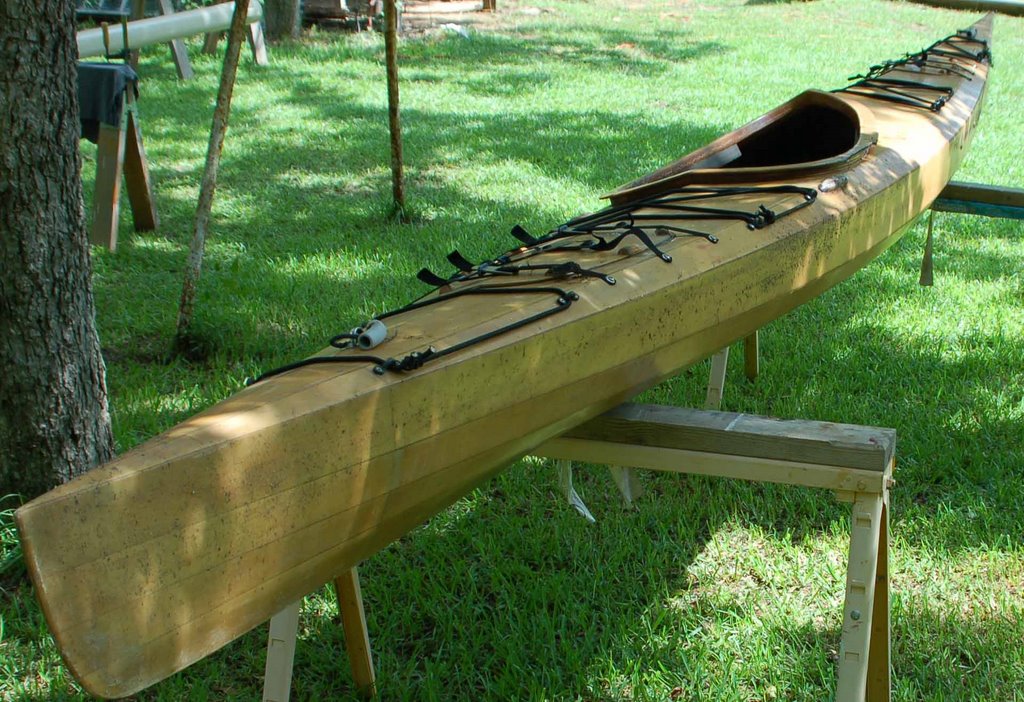
I built this Coho sea kayak from a kit by Pygmy Boats back in 1999 for my personal use. At about the same time, I also built the Pygmy Arctic Tern model, which is a hard-chined design, for my nephew Brian Nobles. I ended up selling the Coho in 2001 while I was off cruising in the Florida Keys aboard Intensity, the lucky buyer getting a great deal on a custom built wooden sea kayak because I needed cash at the time.

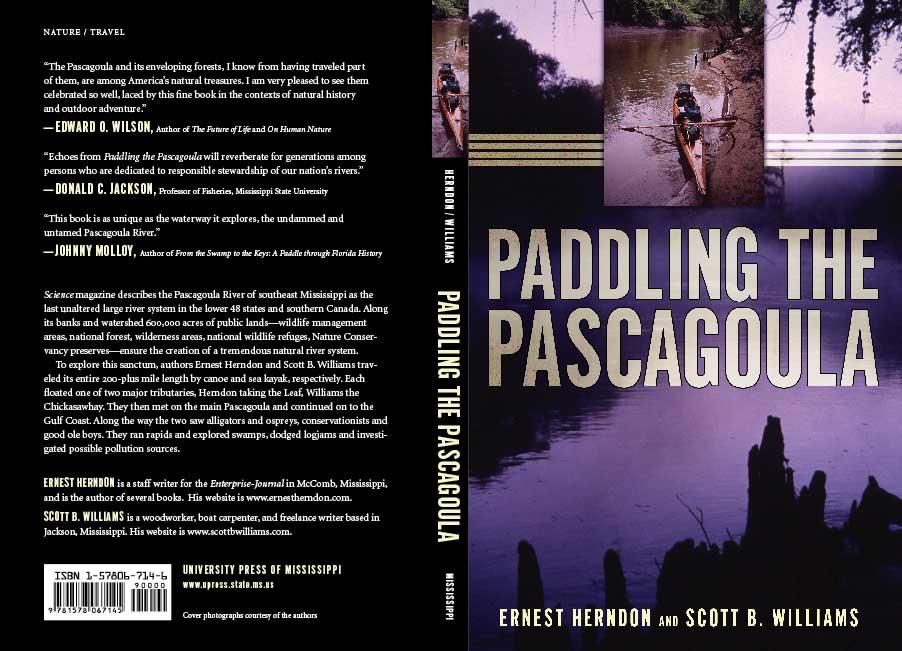
Brian eventually decided kayaking wasn't for him, so I bought the Arctic Tern back from him in 2003 and used it on trips such as the headwaters to the sea trip down the Pascagoula River that I did with Ernest Herndon. (For the book we wrote about this trip, go here: http://www.scottbwilliams.com/Pascagoula.html, the Arctic Tern is even on the cover.)

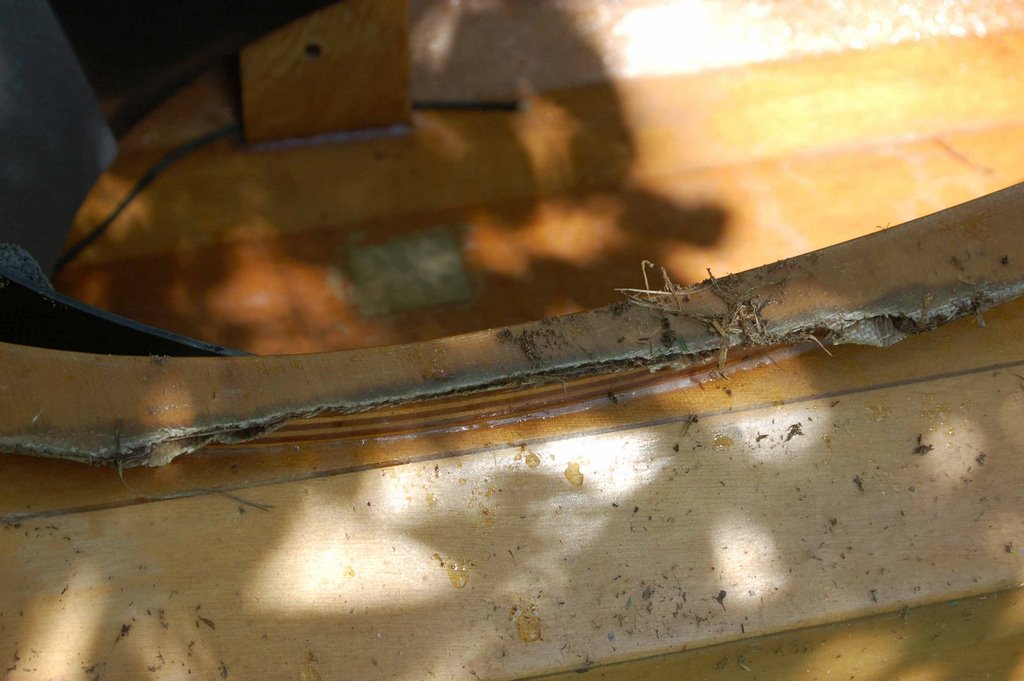
I never expected to see the Coho again, but last week the guy that bought it from me brought it over for repairs to a busted cockpit rim and general refinishing. I was glad to see that this boat has been used hard, as I built it extra strong for expedition paddling.

The cockpit damage was caused by driving into a too-low garage door opening with the boat on a roof rack. The owner ordered replacement parts in 4mm Okoume plywood from Pygmy Boats, so the repair would not involve fabricating any parts. I used a laminate trimming router with a panel-pilot bit to rip off the old coaming, and the new one has already been laminated on with epoxy. Next, I'll shape and glass it, then revarnish the decks and paint the hull from the sheer down. This boat has been scratched and gouged way too much for a decent varnish job on the hull, hence the paint. I think it will still look good, and will be ready for many more years of hard service.

The Coho and the Arctic Tern are both great boats, each weighing only 39 lbs., which is way lighter than any fiberglass or plastic kayak in the size range. They paddle exceptionally well, and track well without rudders, though having owned both I prefer the Arctic Tern for overall handling and tracking ability, especially in big waves or surf.

You can see my Arctic Tern here: http://www.scottbwilliams.com/Pygmykayaks.html

Or go to the Pygmy website and look at all the models they offer here:

http://www.pygmyboats.com/

You can buy the kit and build your own or hire a boatbuilder to do it for you. Pygmy boats are by far the best of the wooden kayak kits on the market, and all these kayaks are designed by John Lockwood, a serious kayaker with decades of experience who uses these boats on real expeditions.

Thursday, August 03, 2006

The Road of Life

My older brother, Jeff, the natural-born musician, singer and songwriter in the family has just released his CD entitled The Road of Life. Jeff has been playing guitar since I was old enough to crawl, and a lifetime of experience playing professionally in rock, country, blues and funk bands shows throughout this great new album. The songs on The Road of Life range from country to blues to an island style reminescent of Jimmy Buffett. Sailors and other travelers will especially appreciate the tracks Islamorada and Big Dark Cloud, and anyone affected by the devastation of Hurricane Katrina last year will be able to relate to track no. 2: Slabbed.

Living several blocks inland from the beach in Gulfport, Jeff got literally "slabbed" by Katrina when the storm surge swept his house off it's concrete foundation and took away all of his family's worldly possessions. Jeff always has been a survivor though, and he has recovered from this loss remarkably fast, moving back to the coast and buying another house farther inland and completing this CD project he had started in early 2005.

You can read more about the Jeffery Williams story on his website, and even listen to clips from each of the 10 tracks on The Road of Life. Check it out here at: http://jefferytwilliams.com

Scott's Boat Pages Site Update

It's been a long time since I've posted to this blog or updated my website, Scott's Boat Pages.
Most of my spare time this summer has been devoted to the extensive refit I've been doing on my Wharram-designed Tiki 21 catamaran, which will hopefully be ready to relaunch and sail about the time the worst of the hot weather here is over. Photos of the new paint job are posted on my other blog, which is devoted to this boat, at: http://tiki21element.blogspot.com/ The work I've done on this boat has included the full spectrum of boatbuilding crafts from woodworking and fiberglassing, to rigging and canvas work. It's been time consuming, but in the end I will have a practically brand new boat that will be ideal for exploring the shallow Gulf coast waters that are still filled with underwater hazards in the wake of Katrina that would make sailing a deep draft vessel chancy at best.

I've made some changes to the layout of the main website, and will soon publish several pages of photo galleries including images of the Mississippi coast both before and after Katrina, various other Mississippi nature photos, and travel and boating photos.

Monday, May 01, 2006

Life After Katrina

I have a feature article in the current issue of Sea Kayaker magazine:
Life After Katrina: The Mississippi Gulf Coast in the Wake of a Major Hurricane.

This issue in bookstores now, for those who are interested. There are several photos in the article from the coast, some taken immediately after the storm and some taken a few months later when Travis Easley and I did some exploring in our sea kayaks.

Here's a link to the Sea Kayaker website: http://www.seakayakermag.com/

An Easy Gulf Passage


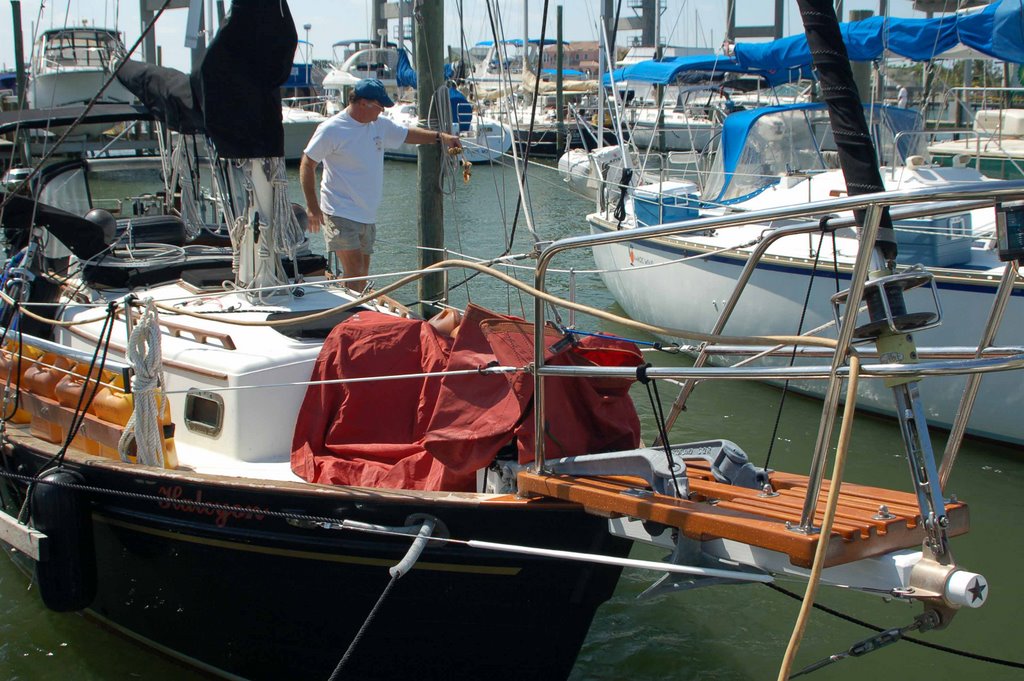
Artie Vaughan and Halcyon at Ft. Myers Beach Marina, FL

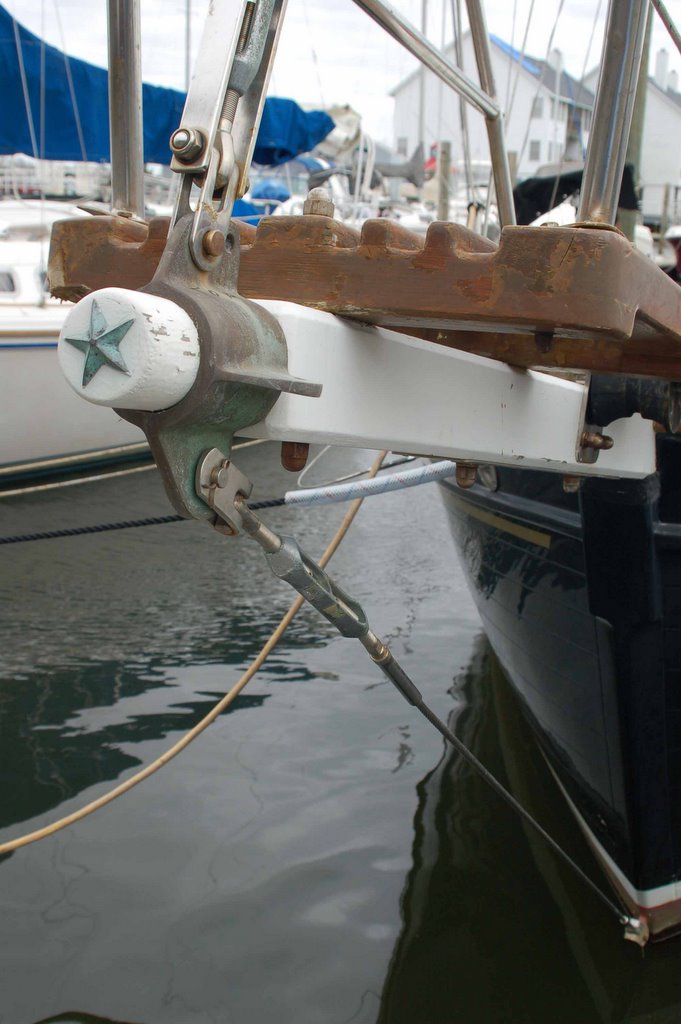
Note the new bowsprit and anchor platform that I built for the boat earlier this year, as well as the new bow pulpit Artie installed.


Artie Vaughan and I had an easy four-day passage across the Gulf from Biloxi to Ft. Myers Beach last week. We left Point Cadet Marina just before dark on Sunday night and made our landfall Thursday afternoon, and had the boat secured at a dock there before dark that evening.

The timing for the crossing worked out just right, as we stayed ahead of a cold front and a line of thunderstorms that was moving into the northern Gulf by Monday. For most of the passage, we enjoyed light winds out of the south, allowing us to sail on a close reach on our direct rhumbline to the southeast. Winds during the trip never exceeded 15 knots, and most of the time were less than 10, making it necessary to run the inboard Yanmar for assistance in maintaining our 5-knot average. Seas were about as gentle as could ever be expected for a period of four days on the open Gulf, averaging about 2-3 feet.


Dolphins in the blue water midway through the passage. There were about 25-30 of them in this group, cruising alongside and playing in the bow wave. This far out, the Gulf is Caribbean clear. At night our wake appeared as a trail of sparks due to heavy concentrations of bioluminescent plankton.


Halcyon is as great a boat as I suspected she was the first time I saw her when Artie arrived at Point Cadet two years ago. All Pacific Seacraft boats are well-built to the point of being over-built, and Artie has especially well-equipped this example of the Orion 27 model. The boat is ready to go practically anywhere on all oceans, with all systems in excellent order and good repair. A retired electrical engineer, Artie is meticulous in maintaining his boat, and in my opinion, wise in choosing a vessel of this size. Give me a well-found 27-footer designed for bluewater cruising any day over the 35-40+ footers that are so popular these days. A boat the size of Halcyon is easier to maintain, easier to handle, and a lot easier to buy and equip, while still being large enough to be comfortable and seaworthy.

Artie is going on from Ft. Myers to the east coast of Florida and then the Bahamas for a few weeks. I'm sure he's going to have a great cruise, and I'm envious of all that time he's going to get to spend sailing a great boat in warm, clear waters.

Saturday, April 22, 2006

Gulf of Mexico Sailing Passage

I'm looking forward to tomorrow. Finally, I'll get to do some serious sailing for the first time since Hurricane Katrina, even though not on my own boat. I'm going to help my friend Artie Vaughn take his boat, Halcyon, across the Gulf on a direct passage from Biloxi to Ft. Myers Florida. This is the Pacific Seacraft Orion 27 that I built a new bowsprit and anchor platform for, as I described in a previous post here: http://islandtimeonline.blogspot.com/2006/01/replacing-bowsprit.html

That job took a lot longer than expected, and among other projects delayed Artie considerably in his plans to sail south and spend as much time in the Bahamas as possible before hurricane season rolls around again. He's still determined to get there, if only for a few weeks, so we're going to make this passage as direct as possible. I'll return to my many projects here when we get to Ft. Myers, and he will go on across the waterway to the east coast of Florida, and then over to the islands, if only briefly.

I'm looking forward to a few days out over the horizon. The ability to do a crossing like that is the main reason I started sailing after so many years of sea kayaking. Offshore voyages are the best reason to own a good, seaworthy sailboat, and Halcyon is certainly one of the best built and best equipped 27-footers I've ever been aboard.

Thursday, April 06, 2006

Leaf River Cottonmouth


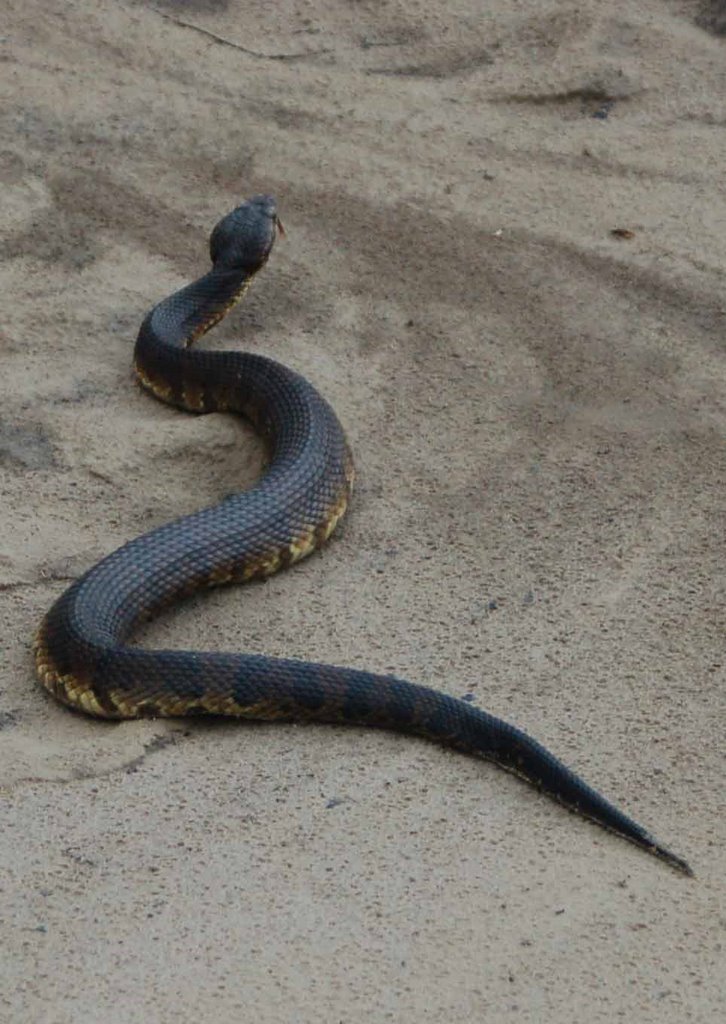
I was lucky enough to catch this guy out in the open, sunning on a sandbar just the the other day when Travis Easley and I canoed the Leaf River in Jones County. Most of the cottonmouths you see along the rivers are well-concealed in bushes or lying on branches or snags, making them difficult to photograph. This one let me walk up to within a few feet and take all the photos I wanted before leisurely turning around and slithering back into the river to disappear in the muddy water.

Wednesday, March 29, 2006

Land Between the Lakes


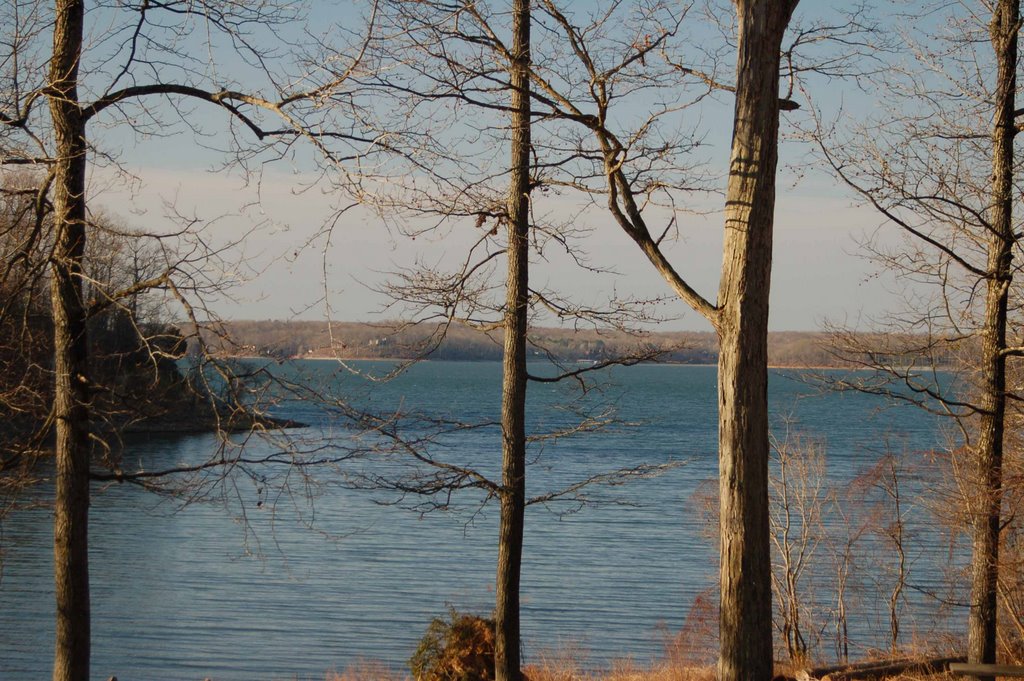
One area not far from Mississippi that I have long wanted to explore but never seemed to get around to is the Land Between the Lakes area in Tennessee and Kentucky. With several hundred miles of shoreline on two huge man-made lakes - Kentucky Lake and Lake Barkley -and thousands of acres of public lands between them, this is an ideal outdoor destination for sea kayaking, hiking and camping.

I didn't go there with any intention of taking a major kayaking or backpacking trip. I simply wanted to go somewhere that I could camp, see woods and water without hurricane damage, and do some hiking and backroads driving for a few days. For this purpose, Land Between the Lakes was ideal. You pay a mere $5.00 fee for a backcountry permit, then you can camp almost anywhere within the boundaries between the two lakes. The weather was perfect while I was there. Warm, sunny days and nights down to about 30 degrees F. The first night I drove down a deserted gravel road to an isolated cove on Kentucky Lake. There wasn't a soul around. After I set up camp and began cooking dinner, a bald eagle flew low right over my campsite. Over the next couple of days I saw a few other campers and fishermen, but for the most part the area was not crowded at all this early in the season.

I ended the trip with a leisurely drive down some Tennessee backroads to the upper part of the Natchez Trace, which I followed south to Jackson.

Wednesday, March 01, 2006

Over the Edge of the World

I just finished reading one of the best non-fiction books I've come across in a long time: Over the Edge of the World, Magellan's Terrifying Circumnavigation of the Globe by Laurence Bergreen, William Morrow, 2003, ISBN 0-06-621173-5

This is a gripping, well-written account of of the first voyage around the world, narrating not only the incredible hardships of the voyage itself, but the almost insurmountable obstacles Magellan faced getting backing for the expedition before setting sail. This is a true story of shipwreck, mutiny, undiscovered lands, exotic cultures, cannibalism, death and eventual triumph by the 18 survivors of the 260 man crew that set out in five ships. I highly recommend it to anybody interested in the sea and sailing, history and adventure and discovery. Here's a link to more information on Amazon.com:

Thursday, February 02, 2006

The Sun Herald's Review of Paddling the Pascagoula

Posted in the Biloxi Sun Herald on Sun, Jan. 15, 2006

Unfettered, a river flows... Canoe, kayak and characters

By SCOTT NAUGLE, SUN HERALD

Paddling The Pascagoula; By Ernest Herndon and Scott B. Williams; University Press of Mississippi; ISBN 1-57806-714-6; $20

When I mentioned I was reviewing this book to a representative of the publisher, she commented that release of the book was untimely considering all that has happened on the Coast. I told her I disagreed completely.

As we all work to reclaim and protect what we had pre-Katrina, it is easy to overlook our natural resources. They, too, were altered, as was the Pascagoula River basin. Our man-made structures, roads, buildings, bridges and casinos, as important as they are, have almost exclusive claim to the spotlight.

In "Paddling The Pascagoula," Herndon and Williams traveled the entire length of the Pascagoula River in canoe and kayak. Herndon began on the Leaf tributary, Williams on the Chickasawhay, and they met where the tributaries join the Pascagoula River and floated together to the Gulf of Mexico. Each authored separate sections of the book.

Many characters were encountered along the way, occasionally the two-legged variety. Williams ran across a Cottonmouth snake 5- to 6-feet long and "as big around as a man's leg." Soon afterward, a huge alligator snapping turtle was spotted, a "loggerhead" to the locals, and then a wild turkey, "a bearded gobbler."

Herndon comes across an ancient fishweir on the Leaf River. A fishweir, illegal in Mississippi as of 1922, is "a V-shaped dam with an opening for a trap at the downstream apex of the V." The Fishtrap Bluff Fishweir is on the National Register of Historic Places.

Though both writers floated days without seeing another human, Herndon did face questioning over why he chose a particular sandbar for overnight camp from a man with "a gentleman-farmer look: straw derby hat, white hair, spectacles, pale blue shirt buttoned to the throat and tucked into pleated khaki pants, brown loafers... He launched into a string of polite but unrelenting questions."

This was Federal Judge Charles Pickering, owner of the sandbar and the land surrounding. Satisfied the overnight stay was legitimate, Pickering warmed into an explanation of "grabbing, hand grabbing, and noodling." He was not referring to the antics of plaintiff attorneys in his courtroom, but rather the trapping and retrieving of fish from hollow logs or holes in the bank. Pickering recounted how as a child he "retrieved a 48-pound catfish out of that hollow log." He is a principled federal judge, and we must believe him about the weight of the fish.

Herndon, a journalist, writes in a style close to his profession. He declaims early on, "If you see an adjective, kill it!" His description of flora and fauna are undoubtedly accurate, but at times I wanted to ask, "but how did all of this untouched beauty make you feel?"

Williams, on the other hand, is more conversational and anecdotal.
Neither writing style is more appropriate than the other. It is simply a matter of personal preference.

In their separate reports, a good-natured ribbing brings a few smiles to the tale of this journey, unusual for a travelogue in nature, but a pleasant addition to this narrative. Herndon on Williams' choice of a kayak: "why would anyone would bring an Eskimo hunting vessel to float a Deep South river, unless Southern customs aren't good enough for them maybe?" Williams on Herndon's use of a canoe: "Ernest, on the other hand, like some less-adaptable and long-extinct offshoot branch of early man, has shown no reason to change or evolve in his boating pursuits."

The Pascagoula River is the last major river in the continental United States essentially unaltered by humans. It belongs to us here in Mississippi. In December 2005, Governor Barbour recognized the need to protect our marine resources on the Coast, including the Pascagoula River, with the introduction of a $7.5 billion Mississippi Coast Environmental Restoration Initiative. "Paddling The Pascagoula" is a strong argument for the legislation and an enjoyable and enlightening read.

--------------------------------------------------------------------------------
Scott Naugle is a free-lance writer living in Pass Christian. He is also owner of Pass Christian Books.

Wednesday, January 25, 2006

The Art of Knots

Although I'm a sailor and am consequently obsessed with boats and all things nautical, I've pretty much limited my knot tying efforts to those everyday useful easy ones like the bowline, the rolling hitch, the square knot, the stopper knot, etc. My girlfriend Michelle, however has taken to the art and craft of fancy knot tying and rope work with a passion. She's left me far behind in my meager knowledge of knots, and lately has enough 600-foot spools of manila on hand to rig a small schooner. Michelle got her inspiration from the late Captain Charles Strickland, who she met this past summer at Point Cadet Marina as he was in his last days battling cancer. Capt. Charley's dream was to pass on as much of his knowledge as possible before he was gone, and Michelle was an eager student during the brief visits they had while he could still teach.

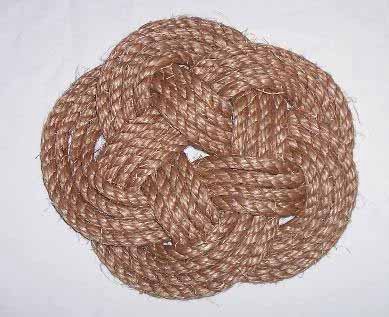
Now she's making plaited rope door mats, bowls, trivets and monkey's fists keychains just to name a few. Here's some examples in the photos below:


This is a round Turk's Head mat that can be used in the galley or at home to put hot pots or dishes on.


This large door mat is called an "Ocean Plait" Made from 1/2-inch manila, it's durable and just gets better with the effects of age and weather. These are a great nautical touch for a sailor's front door, or for the dock or in the cockpit.


This cool knot is a Monkey's Fist. These small ones make great key chains that tell everyone you're a sailor. They are also usefull all over a boat where you need a handy pull, such as attached to zippers as my friend Artie has done on his sail covers. These small one's are made from 1/8-inch Dacron cord. They can be made most any size.

Email me for prices and shipping information at: scott@scottbwilliams.com if you are interested in any of these pieces of traditional nautical art, or if you have questions.

Friday, January 20, 2006

Replacing a Bowsprit


In my last post I described a simple kind of sailing I intend to pursue on a Wharram Tiki 21, a catamaran designed with low-tech, but appropriate technology based on the traditional "double canoes" of the Pacific Islands. All Wharram catamarans are designed to be simple to build and simple to repair, even on a remote beach where tools and materials are limited.

By contrast, most modern yachts are vastly more complex and utilize hundreds of specialized and expensive fittings. Working on them requires lots of tools, and almost all repairs on such vessels are costly and time-consuming.

The photo above shows the bowsprit and anchor platform on a Pacific Seacraft Orion 27 Cutter, one of the finest heavy-dispacement sailing craft of it's size in the world. I spent several hours yesterday with the owner, my good friend, Artie Vaughn, working together on the difficult task of removing this bowsprit, which was cracked when it came in contact with some pilings during Hurricane Katrina. Since I'm going to use the old one as a pattern to make the replacement, I needed to get it off in one piece. After removing the bow pulpit, teak anchor platform, forestay, bobstay, whisker stays and anchor rollers, we then found that the sprit was bedded to the deck with 5200 adhesive and bolted through massive mahogany samson posts with 1/2 inch threaded rod. There was no way those samson posts were coming out without tearing half the bow off the boat, so we had to cut the threaded rod and then alternately jump up and down on the end of the sprit and winch it upward with the staysail halyard to break it free. At last it came loose with only a small fracture on the bottom side.

Today I picked up the Douglass Fir 2 x 6s I ordered to build the new sprit, which will have to be laminated to the proper thickness, then tapered down and shaped to match the old one. Making it won't be near as hard as removing it and replacing it. While I'm at it I will make a new teak anchor platform to match the old one as well.

Artie and I are both addicted sailors who can never get enough of boats, but after days like yesterday we question why we bother. The amount of work is certainly disproportionate to the fun sometimes, especially for him with his massive and complicated vessel. But, in a week or two I'll deliver that new bowsprit to him and we will somehow get it reinstalled. Then there will soon come a Spring day when he'll be on a beam reach heading out into the Gulf and all the hard work will be forgotten. And hopefully, between working on everyone else's boat I'll find time as well to put my little catamaran back together and head out myself.

Thursday, January 05, 2006

Tiki 21 Catamaran Project


I'm going back to a simpler kind of sailing for 2006 after loosing Intensity to hurricane Katrina. I've long been fascinated with James Wharram catamarans and built one of his smallest designs the Hitia 17 beachcruiser, back in 1997-98. (See a photo and description here) I had originally planned to build one of his Tiki 26 or Tiki 30 cruising catamarans, but instead bought my Grampian 26 (Intensity)and put most of my time and energy into refitting and cruising on it. The disadvantages of a deep-draft keel boat have long been apparent to me, and the lack of truly safe harbors on the Mississippi coast when a hurricane threatens is definitely one of those disadvantages.

Most multihulls are shallow draft, and Wharram catamarans are designed to really take advantage of this feature, with hull forms that require no underwater appendages such as centerboards or daggerboards to enable them to sail to weather. They can dry out on a falling tide and even the bigger ones can be sailed right up to the beach.

Although I have the building plans for the Tiki 26 and have long thought this was one of the most practical sizes for my needs, shortly after Katrina wrecked the Gulf coast I purchased a used Tiki 21 from a couple in Ocean Springs. The price was right and the catamaran came with a galvanized trailer. Trailerability was especially important to me with most of the marinas on the coast wiped out. I could bring the boat inland for a complete refit and take it back to the coast after some of the clean-up and rebuilding was done.

The Tiki 21 is an excellent beachcruiser style of boat. While too small to live aboard in the conventional manner, it does have a dry sea berth in each hull to make longer passages possible, and the expansive bridgedeck between the hulls makes a great platform to pitch a tent once the boat is anchored for the night. Although small, the Tiki 21 is a proven offshore passagemaker. It was designed as a coastal cruiser by James Wharram in the early 1980s and was never intended for long ocean passages. Despite this, a young man named Rory McDougall built one in Devon, England and left in 1991 bound for New Zealand. He eventually sailed on around the world, making the Tiki 21 the smallest catamaran in history to circumnavigate. He returned from the voyage enthusiastic about the boat, and continued to use it for shorter trips, with no desire to acquire a larger one. It takes a different sort of mentality to voyage that far on such a small, mostly open boat, but Rory's completion of the trip shows what is possible. As he said, his boat would be considered luxurious by the standards of the ancient Polynesian voyagers whose craft were Wharram's design inspiration.

Having traveled far in much smaller boats (namely canoes and sea kayaks), I'm familiar with the concept of simplicity and the advantages of carrying less and using less in the way of complex systems. The Hitia 17 that I built years ago was at the time my idea of a perfect small cruiser, but it's primary limitation was that there was no secure place anywhere on board to sleep while underway or to get out of the weather if caught out in bad conditions. It's also a bit limited in load carrying capacity for longer trips, where as the Tiki 21, with a capacity of 1,000 pounds, should have a good range for singlehanding, with room for everything one needs for this elemental form of cruising.

It seems to me that this boat, with its shallow draft of just 14 inches, stability and seaworthieness of it's deeply flared V-hulls with an overall beam of 12' and it's cruising speed of up to 10-12 knots in the right conditions, will be ideal for exploring the islands and estuaries of the Gulf coast. I can also envision cruising it among the far-flung mangrove cays of the Florida Keys and the Everglades, having a comfortable camping platform for overnight stops away from the mosquitoes and no-see-ums of the beach. A voyage across the Gulf Stream to cruise the Bahamas is certainly within its capacity for one willing to put up with a little discomfort, and such a trip is one of my goals for this boat.

Wharram catamarans are being built and sailed throughout the world, and many resources are avaiblable on the Internet for those interested in these boats. The best place to start is at the source itself: www.wharram.com for information on all the designs available. As I complete the refit and modifications of my Tiki 21, I plan to post photos and commentary here for all who are interested.

Thursday, December 01, 2005

Paddling the Pascagoula Calendar Available


Readers of the new book Ernest Herndon and I coauthored, Paddling the Pascagoula, might be interested to know that I've put together a 2006 calendar with images from the Leaf, Chickasawhay, and Pascagoula Rivers taken during the trip described in the book.

It's available to order now from Lulu.com. Just click on this link:


Support independent publishing: buy this calendar on Lulu.

Tuesday, November 29, 2005

Kayaking in the Aftermath


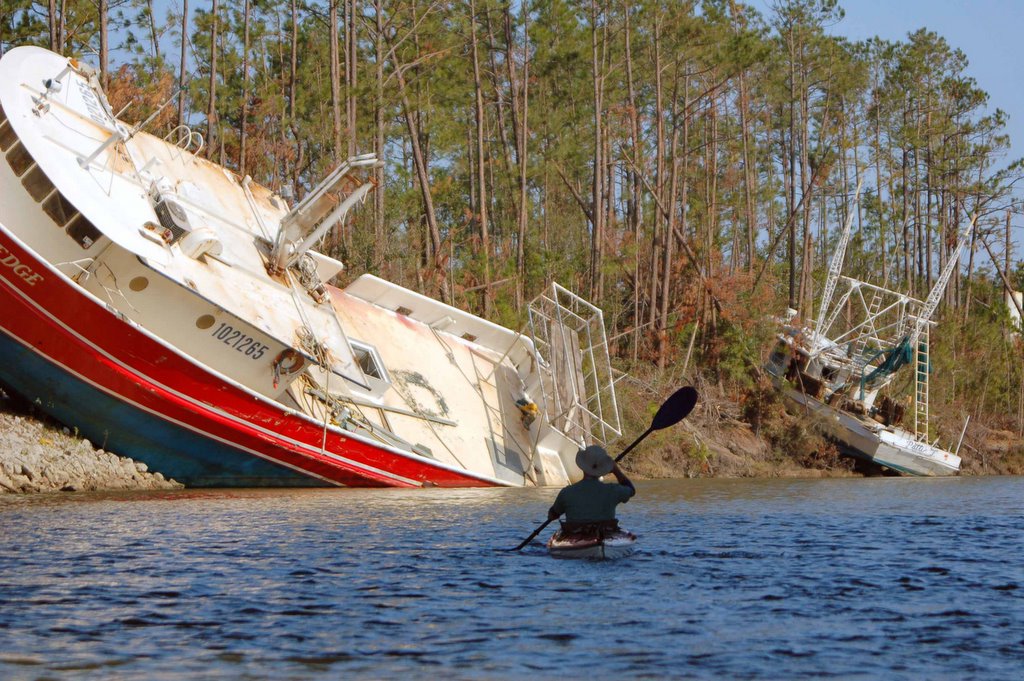
Travis Easely paddling past grounded fishing vessels in the Industrial Seaway


Kayaks are probably the safest boats in which to navigate Mississippi's coastal waters at the moment. There's an unbelievable amount of debris hidden beneath the surface almost everywhere that would pose a serious threat to most larger vessels.

I did some exploring by kayak over the Thanksgiving holiday week, launching solo from Ocean Springs harbor one day and paddling up Davis Bayou and then over to Deer Island and back on one day trip. Then Travis Easley and I made a loop trip around Bernard Bayou to the Industrial Seaway and down to Big Lake and back to our starting point.

Deer Island appears normal when viewed over the horizon from the mainland, but once ashore it is easy to see the effects of Katrina. The beaches are littered with debris from mainland homes and many trees are down in the predominately pine forests that cover the island. A lot of beach erosion has occured as well. Overall, however, the island hasn't changed in a significant way and will certainly recover. I only explored the southeast end on this trip. Travis Easley and I went back Sunday with my Necky Tesla and his new Current Designs 14-footer and planned to launch from the beach near the former location of the Biloxi Yacht Club. We had unloaded the boats when we were informed by a Biloxi police officer that it was a $500 fine to drive around a barricade and park on the south side of highway 90. There were no signs to this effect. Thankfully, he let us off on the condition that we load up and leave immediately, so our plan to circumnavigate Deer Island was dropped and we did the Bernard Bayou loop from the park at Switzer Road instead.

Although most have been removed by now, there are still plenty of wrecked commercial and pleasure boats along the Seaway and in the bayou. We paddled past sunken boats and destroyed houses, but found the marsh and woods surprisingly intact in this area. I hope to get out to the barrier islands and to the lower Pascagoula River soon. The purpose of these day paddles is to take photographs and gather observations for an article about what was lost here to be published in an upcoming issue of Sea Kayaker magazine.

Monday, November 07, 2005

Latest "Backwoods Drifter" Ready to be Launched


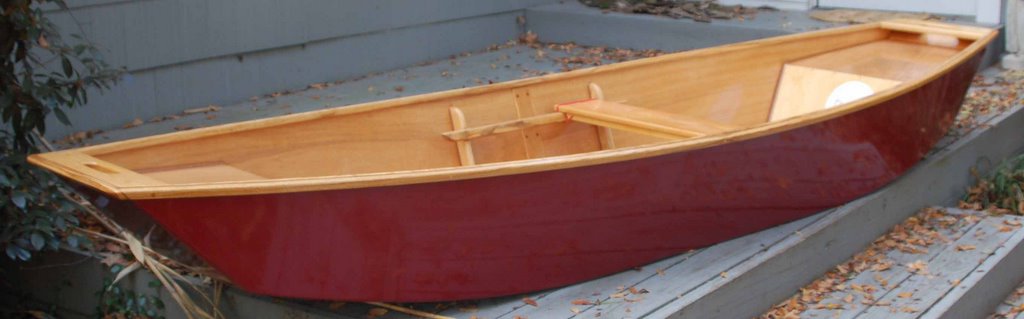
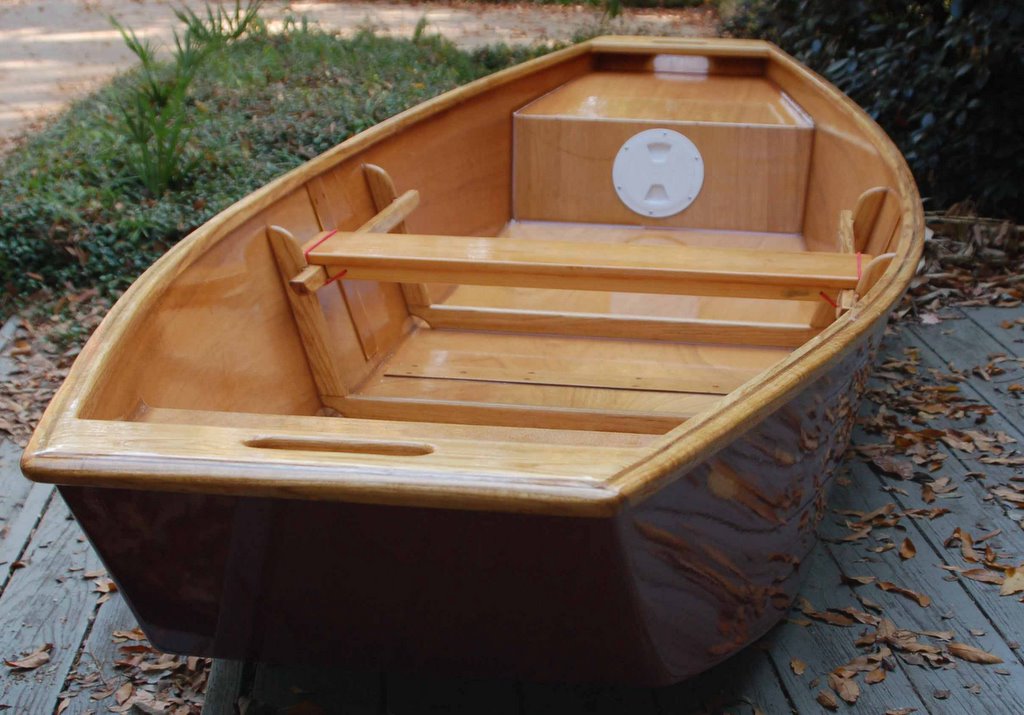
12-foot "Mississippi Backwoods Drifter"

Here's the latest example of my custom-designed and built "Backwoods Drifter." This boat was built on commission for a fellow in east Texas who plans to use it for floating creeks and fishing. I've also documented the building process while constructing this boat and will soon have plans available for those who wish to try building their own. It's a fairly simple boat to build, using the "stitch and glue" epoxy-plywood composite method. This produces a strong, long-lasting wooden boat that shows the beauty of natural materials without the need for constant maintenance traditionally associated with wooden boats.


Thursday, October 20, 2005

Paddling the Pascagoula Book Cover


I just received a photo of the cover of my newest book, Paddling the Pascagoula, which I co-authored with Ernest Herndon. The book is a narrative of our trip from the headwaters of the Pascagoula River system to the Gulf. More about the book and more photos from the trip can be found here: http://www.scottbwilliams.com/Pascagoula.html

The main background image on this cover is a photo I took at dawn from one of my campsites on the Chickasawhay River. The inset is a photo I took of my wooden Arctic Tern sea kayak at a lunch stop near Waynesboro.

The book should be available sometime early next month.

Last Visit to Intensity

Yesterday I made one more trip to Discovery Bay to salvage a few more items off of Intensity. It's been awhile since my last post, but Ernest Herndon and I went looking for my boat in his canoe and found it after paddling up the canal from the marina and then hiking/wading across the marsh to the back side of the dense woods adjacent to the marina basin. Being dark green, the boat is hard to spot in the surrounding vegetation.

When we found her that day, I discovered that looters had broken in and taken a few items, but there was still a lot of gear on board that we were able salvage; much of it will be useful on another boat at some point. A few weeks passed and I decided to go back with tools and try to remove more stuff, particularly hardware and other useful equipment that was bolted down.

I knew when I first found the boat jammed between two pine trees where it was that it would not be sensible to try to salvage and repair it. The storm surge was reported to be 30 feet high in this area, and it's obvious by the fact that the boat was carried through the tree tops before being dropped where I found it by the receding water. A section of my mast was hanging from the top of one of the trees, the rigging caught on branches at least 50-60 feet above the ground.
The rest of the mast was lying across the cabin top, the mast tabernacle torn out through the deck. Besides dismasting, the bow pulpit and several of the stanchions were torn off, as well as the port sheet winch. The rudder shaft was bent and the tiller post pushed down through the cockpit floor. The hull is still sound, a testimony to the solid construction of old Grampian boats. But as anyone who has ever built or rebuilt a sailboat knows that a hull is only a small percentage of a cruising vessel. I knew it was time to move on to the next boat and the only thing to do was salvage what I could and cut my losses.

Yesterday's trip was successful, in that I got just about everything on the list that I made in advance. The whole Discovery Bay area is a scene of utter destruction, and even now there has been no effort at clean up. A few boats have been removed, but those in the woods like mine are still just as they were after Katrina left them there. The place was deserted yesterday and eerily silent as I worked alone in the woods and rowed back across the bayou in my heavily loaded dinghy. I suspect it'll be a long time before I return to this backwater yacht basin that was home to my boat for so many years.

Monday, September 19, 2005

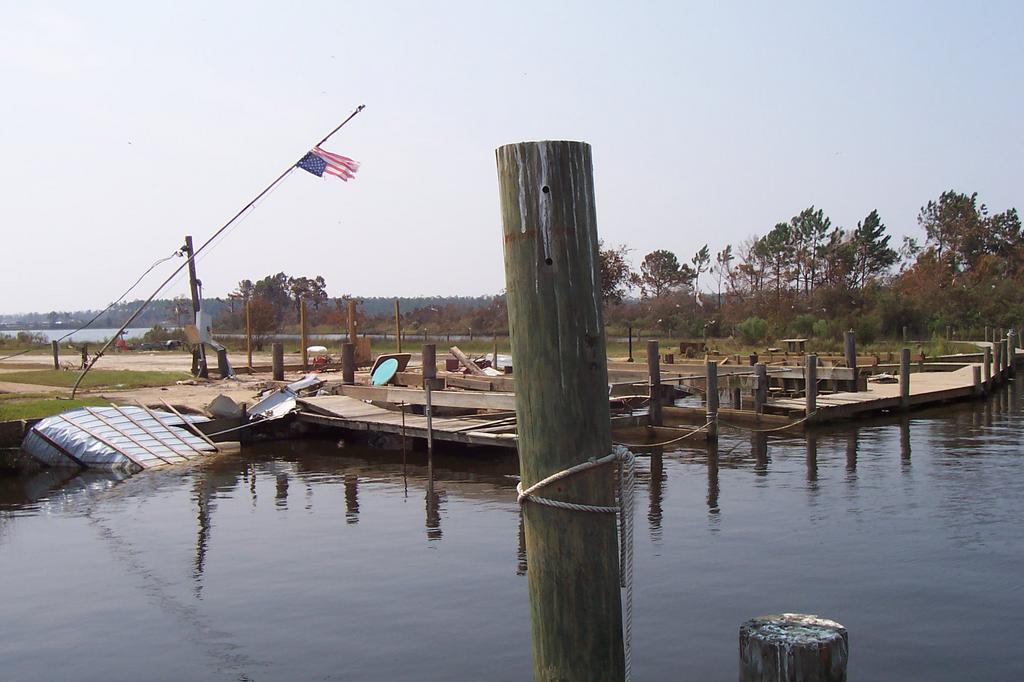
Discovery Bay Marina Wiped Out


This is all that remains of the bar and grill at Discovery Bay Marina.


One of my favorite little funky marinas and backwater bars on the Mississippi coast was Discovery Bay Marina. I've had a long association with this place, having kept my boat there on and off since I bought her in 1999. Hurricane Katrina's storm surge swept Bayou Portage clean, leveling the bar and carrying most of the boats in the marina into the surrounding woods and marsh.

My boat, Intensity, was here as well, as I had left Point Cadet Marina in Biloxi a month earlier to seek refuge from Hurricane Dennis. When Katrina set her sights on the northern Gulf coast, it was too late to go elsewhere, so I secured the boat as best I could where she was. Not many boats fared well on the Mississippi coast, considering the size of this storm, so it didn't make a whole lot of difference where you were, a lot of it was just luck, either good or bad. Intensity is gone, likely swept far into the inaccesible woods nearby. I went down on Labor Day, a week after the storm and rowed to the marina in the dinghy, searching the surrounding banks and winding canals nearby, but could find no sign of my faithful old Grampian 26. Many of my neighbors boats were nearby, swept up into the trees, some half sunk at the water's edge, some hard aground and others dismasted or totally destroyed. The road into the marina was blocked by 50-60 shrimp boats, piled up like toys on their sides and in heaps of rubble.

Ernest Herndon and I are going back this week with a canoe to search the area more carefully. I don't have much hope for Intensity, but if we find her I should be able to salvage some gear that I left on board.

Sunday, August 14, 2005

Ernest Herndon's Website and Blog

My canoeing buddy and coauthor of the forthcoming book: Paddling the Pascagoula, has recently launched his own website: http://www.ernestherndon.com, as well as started a blog called Leather Britches. Leather Britches is the name of his long-time weekly outdoor column at the McComb Enterprise-Journal, the newspaper in south Mississippi where he works as a full-time reporter.

The website (which I am building for him), will be a one-stop place on the Internet to find out all about his books - both his current ones and out-of-print works - and provides links to purchase them from Amazon. There will soon be many photos posted from his various adventurous exploits, from the backwoods of the Deep South, to the highland jungles of New Guinea.

The Leather Britches blog will feature an online version of his weekly outdoor column, which always offers fascinating stories from southwest Mississippi and beyond. An example is his most recent article about a 7-foot long Gulf sturgeon recently found in the Bogue Chitto river. To read it go to the blog at: http://leatherbritches.blogspot.com